
Pranayama, a yogic breathing practice, improves lung health by increasing lung capacity, strengthening respiratory muscles, and enhancing oxygen intake. Techniques like Kapalabhati, Anulom Vilom, and Bhastrika involve controlled, rhythmic breathing that trains the lungs to work more efficiently.
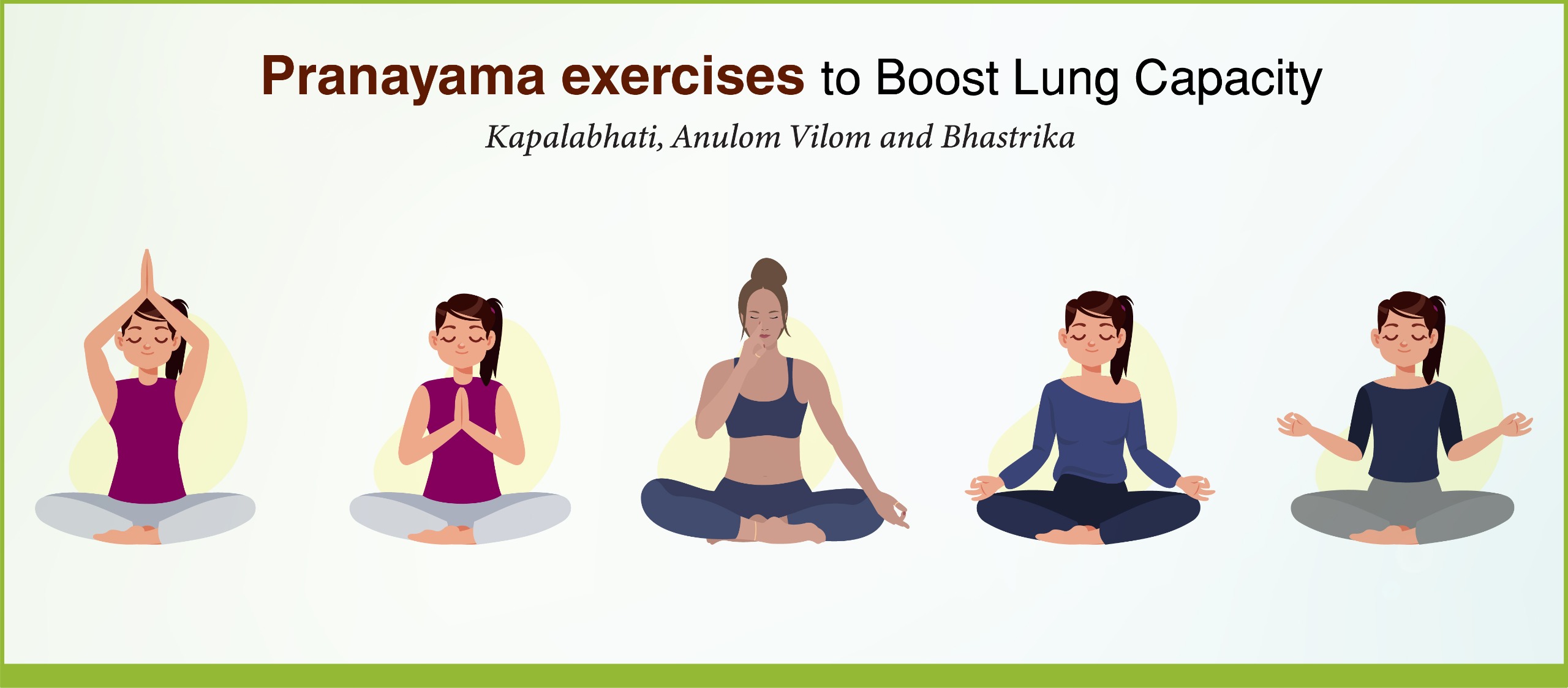
Key Benefits of Pranayama:
- Increased Lung Capacity:
- Pranayama exercises help lungs expand fully, improving oxygen intake.
- It slows the natural decline in lung function that begins around age 35.
- Techniques like diaphragmatic (“belly”) breathing strengthen the diaphragm, which is especially helpful for conditions like COPD.
- Pursed-lips breathing and alternate nostril breathing also improve lung efficiency.
- Stronger Respiratory Muscles:
- Regular practice strengthens the diaphragm and other breathing muscles.
- Techniques like Kapalabhati and Bhastrika involve forceful exhalations, engaging and strengthening these muscles.
- Lower Respiratory Rate:
- Pranayama makes the lungs more efficient, reducing how often you need to breathe and decreasing the workload on the lungs and heart.
- Deep, slow breathing activates the relaxation response (parasympathetic system), calming the body.
- Better Oxygenation:
- Controlled breathing improves oxygen exchange in the lungs, boosting mental clarity, energy, and overall vitality.
- Techniques like Ujjayi (victorious breath) optimize oxygen use, making the body more efficient.
- Cleansing the Lungs:
- Pranayama removes dust and toxins from the respiratory system, improving lung function and keeping airways clean.
Scientific studies show that regular pranayama practice increases lung capacity and improves respiratory health, making it beneficial for people with conditions like asthma and bronchitis.